Thursday, August 15, 2013

Florida Bound

It's always an adventure when I return back to Florida.
Of course, people say (myself included, to be fair) that there isn't a whole lot to do in Gainesville. The truth is that it really just takes a bit of creativity. Of course, other people don't have my sisters so I guess I've got it easy.

Together, we interacted a bit with the local wildlife:

 ((Though Caitlin's pups preferred a rather more sleepy interaction))


Had endless bunny cuddles:


Created feasts fit for kings:


Partook in some cutthroat boardgaming:
 
 And accepted our role of beautifying the city:


Saturday, August 10, 2013

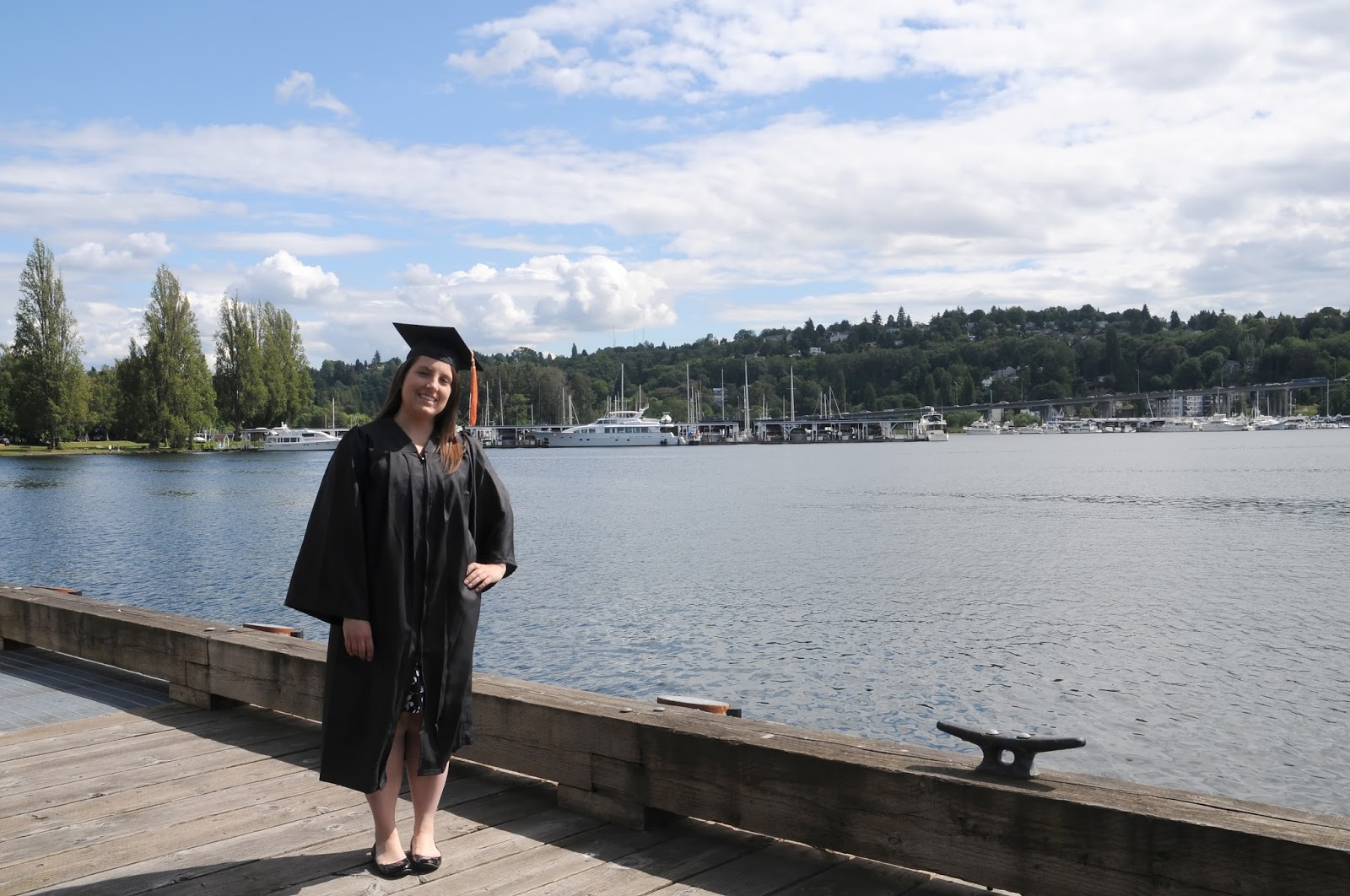
Graduation Flashbacks (already)

Earlier today I was running around the city in preparation for my flight to Florida tomorrow and picking up some last minute items.
At one point I found myself walking past campus and found myself reminiscing about the fun times I've had there.

Well, that certainly didn't take long. Graduation was what, one month ago?

Luckily, my good friend Alex and I had decided to have a day of cap and gown photos around campus just before classes had finished. After all, she was the first person I got to know in Seattle, so it was only fitting that I do my last school related activity with her.
She also took the time to filter out the good photos from the hundreds that we took and finally sent them on to me, so I was able to satisfy my reminiscent mood today.


Tuesday, August 6, 2013

VISIONS '13 Expedition

So for the past two weeks, I may have been a bit out of touch.
But that was mostly because I was on a ship in the middle of the Pacific Ocean, about 300 miles of the coast of Oregon and sitting pretty about 1 mile above an underwater volcano known as Axial Seamount.This was not for vacation or a simple pleasure cruise, but rather to work as a part of a project building an underwater cabled observatory across the Juan de Fuca tectonic plate.


This project, called the Regional Scale Nodes, is part of the Ocean Observatories Initiative and aims to provide constant, real time oceanographic data from key points of the seafloor. 


The expedition that I was on, VISIONS '13, was carried out on the R/V Thompson and we spent the majority of our time above Axial Seamount, laying cable and instruments within the caldera of the volcano.
In order to even do this, we used the remotely operated vehicle, ROPOS, which is operated by the Canadian Scientific Submersible Facility.


This underwater robot is equipped with lights and HD video cameras, and is tethered to the ship so that we can see what is going on at the seafloor including life, lava flows, and hydrothermal vents.


The video feed is brought back to the ship via the tether, and shared live to the public. Video updates were done every evening, and there were a number of students on board (including myself) that were actively involved in the audio updates throughout the day.


Because the main goal of this expedition was to continue building the cabled observatory, much of what occurred during the ROPOS dives were engineering oriented. Mostly we were putting together what is known as the secondary infrastructure. While the primary infrastructure carries the high power and bandwidth from land out to the chosen sites at sea, the secondary then portions out the power to the individual instruments and retrieves the data.


 Sometimes we ran into issues (such as bad weather that prevented us from deploying ROPOS, or kinks in the cable as shown above), but in the end it was a mostly successful cruise. We even managed to collect some some basalt (cooled lava flow) and sulfide chimney (hydrothermal vent pillar) samples, and picked up an earthquake shortly after laying down some seismometers!


 Eventually we said our farewells to the volcano and the ocean and headed back to port in Newport, OR.


Back on land, the students, the engineers, the scientists, and the crew gathered together for some last photos before finally parting ways.


I was truly honored to be a part of this expedition and oceanographic history. I've even got a couple of research projects in the back of my mind that I might consider using to join on the cruise next year as well. After all, now that I'm graduated, it's time to start getting creative.
In the meantime, I'll be sure to put up a couple of blog posts going more indepth about some of the more interesting topics that were covered during the cruise, such as hydrothermal vents and ocean robotics. So keep an eye out for those.